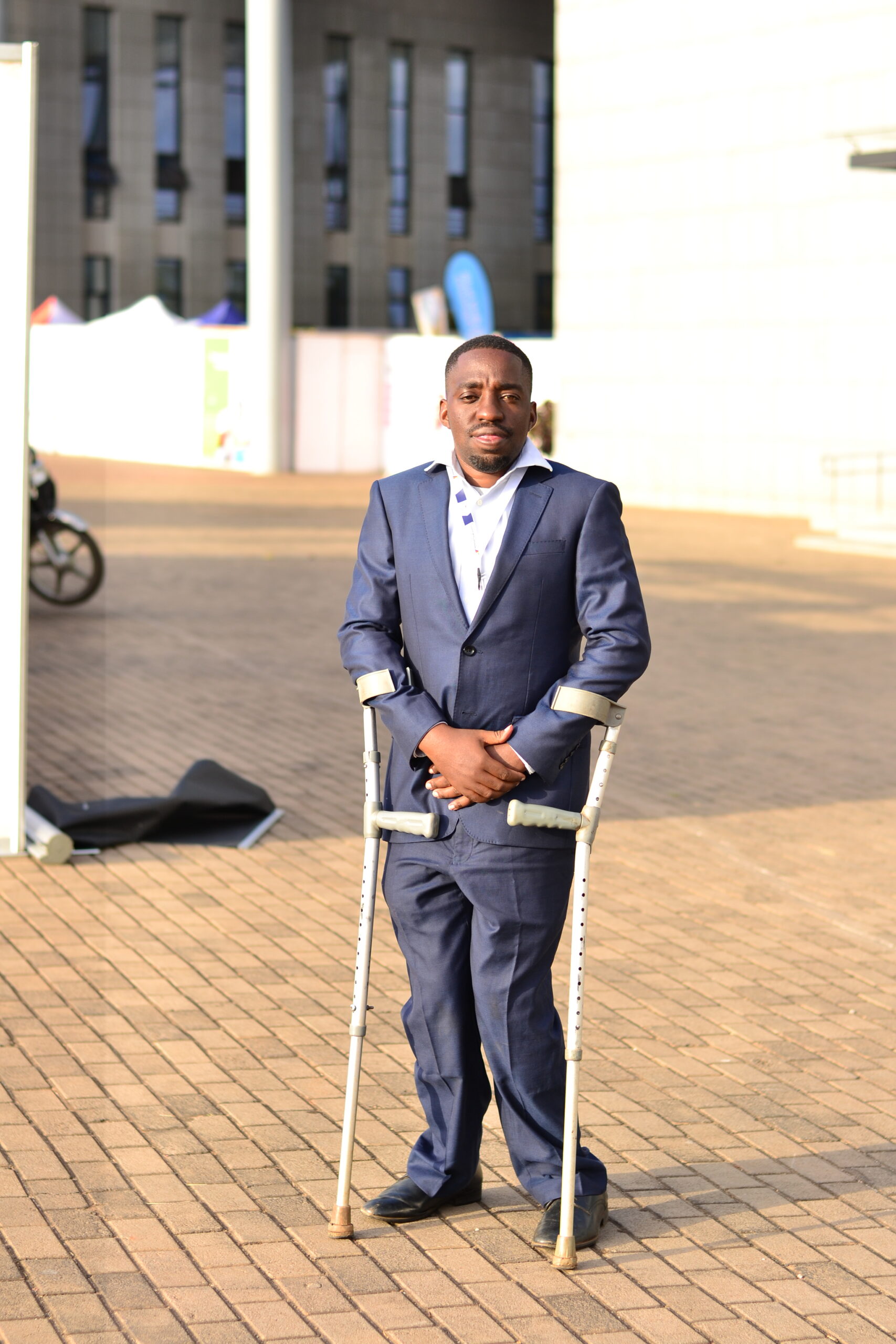
Holmes P. Burton
Graphic Design · Mindset Shift
Lilongwe · Within the last 3 months
Holmes P. Burton was a Systems Engineer in Lilongwe, Malawi, good at what he did and fluent in the databases, infrastructure, and technical architecture that make systems work, but somewhere between the code and the logic he noticed a gap he could not ignore. In his other life as Africa Regional Representative for the Commonwealth Disabled People’s Forum and youth leader at FEDOMA, he watched communities get left behind by platforms built without considering diverse needs and systems that excluded the very people he spent his days advocating for. He believed technology was the ultimate equaliser, but he had begun to realise that most technology was not designed that way, and that he was part of the problem, because he could build brilliant systems without having any idea whether they actually worked for the people using them.
Holmes enrolled in ALX’s Graphic Design programme not to switch careers but to fill the gap, stepping into what became the hardest education of his life as he discovered that technical thinking and creative thinking operate in completely different ways and that learning to hold both at once required a fundamental rewiring of how he approached problems. He was mentored by Richard Rieser from CDPF, who showed him how to take grassroots challenges to global platforms, and by his manager Rejoice Namale, who modelled what it means to lead with both empathy and operational excellence, and through those relationships and the programme itself he began seeing everything differently, asking of every system he had ever built whether it had truly been designed for the communities it was meant to serve. The answer that stayed with him was simple and demanding in equal measure: inclusivity must be built in, not added as an afterthought.
Holmes is still a Systems Engineer at CDPF, still a youth leader at FEDOMA, and still advocating for disability rights across Africa, but something fundamental has changed in how he works because now when he builds something he thinks simultaneously about the technical architecture and how it looks and feels to the person navigating it, whether someone with a visual impairment can move through it, whether a young person from a marginalised community understands it immediately, and whether the system was truly designed with the community rather than simply for them. The outcome was never a career change but a complete reframe, grounded in a conviction he now carries into every project: technical and creative skills are just tools, and empathy and accessibility are what turn those tools into solutions that actually work for everyone.
Systems Engineer at CDPF | Youth leader at FEDOMA